


Registered Voter Mailing List
The United States stands as one of the rare nations in modern history that has been governed by a democratic system from its founding. Unlike countries that have transitioned from monarchies, colonial rule, or authoritarian regimes, the U.S. was established on the principle that power ultimately resides with the people. This democratic ethos permeates every level of governance—from local municipalities and counties to state legislatures and the federal government. American citizens, through their constitutional rights, have consistently exercised the power to choose their leaders, shaping the course of the nation through participation in free and fair elections.
At the heart of this democratic tradition is the electoral process, a complex but vital engine that fuels representative government. The electoral cycle begins with political campaigns that aim to inform, persuade, and mobilize voters. Candidates from various political affiliations present their platforms, engage in public discourse, and debate key issues to win the trust and support of the electorate. These campaigns range from grassroots efforts to large-scale operations involving digital outreach, media advertising, and in-person engagement across communities.
Voting itself is a flexible and inclusive process, designed to accommodate the diverse needs of the American public. While traditional in-person voting on Election Day remains a cornerstone of the system, the inclusion of absentee and mail-in ballots has significantly expanded access. This evolution ensures that citizens who face barriers—whether due to disability, demanding work schedules, or geographical isolation—can still participate fully in the democratic process. The option to vote by mail has become particularly crucial in enhancing participation rates and ensuring that no eligible voice is left unheard due to logistical constraints.
Democracy, however, is not a one-time achievement but an ongoing endeavor. Although the country may currently be between presidential election cycles, democratic activity continues year-round through various local, county, and state elections. These contests are essential, often determining leadership and policies that directly impact communities. Meanwhile, preparations for the next presidential race are already taking shape, as major political parties and independent candidates begin to strategize, organize, and reach out to potential voters.
Sprint Data Solutions Worldwide Marketing has long played a supportive role in this democratic framework by partnering with political organizations to facilitate effective communication and outreach. With extensive experience in direct marketing and voter engagement strategies, the company has been instrumental in helping campaigns connect with the electorate. As the United States gears up for another pivotal national election, Sprint Data Solutions is ready once again to assist in the crucial task of voter awareness and participation—contributing to the ongoing health and vibrancy of American democracy.
About Sprint Data Solutions Worldwide Marketing
Sprint Data Solutions Worldwide Marketing is the realization of a vision by a disabled veteran who proudly serves as the founder, owner, and operator of this wholly American-owned enterprise. Following years of honorable military service marked by dedication and sacrifice, he redirected his energy from national defense to national development—specifically economic empowerment. The goal was clear: contribute to the growth of the American economy by equipping businesses with the tools to expand their reach and amplify their revenues. This mission began in Las Vegas, Nevada, where the company was launched as a small, locally focused venture. Thanks to a reputation for delivering measurable results and a client-first philosophy, the company has steadily evolved. Today, it employs a trusted team with over 50 years of collective experience in the marketing and promotional sectors.
Sprint Data Solutions entered the marketing landscape through the direct mail channel, a field that required precision, data accuracy, and targeted outreach before the digital revolution transformed the industry. This early specialization allowed the company to develop extensive databases and mastery over vital marketing assets—names, physical mailing addresses, demographic segmentation, and behavioral targeting. These capabilities proved invaluable to businesses seeking to connect with specific customer profiles. The strength of this foundation fueled consistent growth, propelling the company beyond Las Vegas and throughout the continental United States. Soon after, operations expanded to include Alaska and Hawaii, enabling true nationwide coverage.
Building on its domestic success, the company then expanded to serve all of North America, including key commercial markets in Canada and Mexico. This continental footprint laid the groundwork for global ambitions. Today, Sprint Data Solutions Worldwide Marketing provides international reach for its clients, helping them penetrate diverse global markets such as the European Union, with an established presence in countries like France. The company’s evolution from a local mail marketing firm into an international data-driven marketing powerhouse reflects its unwavering commitment to client success, innovation, and its founding values of discipline, service, and strategic excellence.
Elections Are Different In The New Millennium
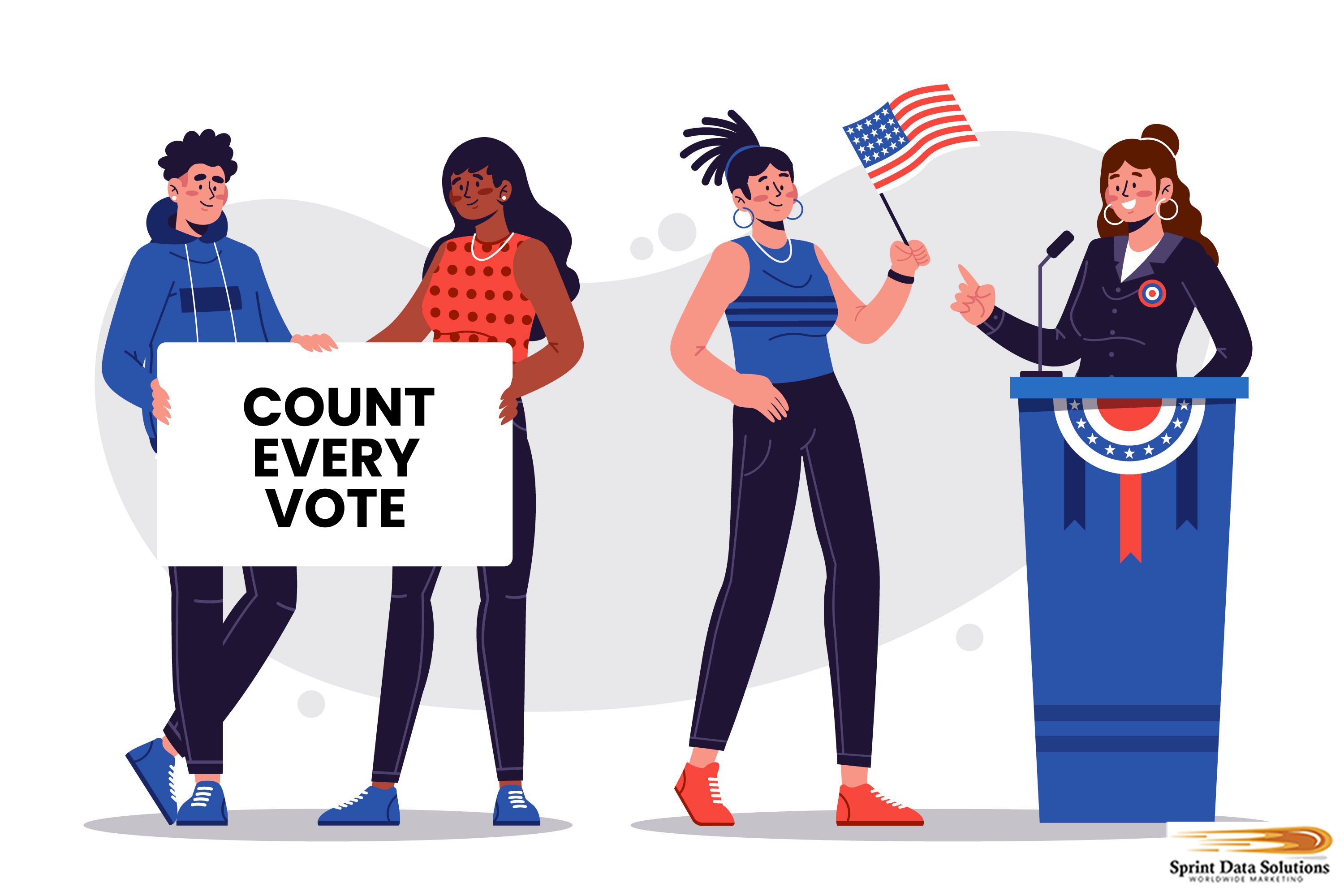
The democratic process has undergone significant transformations, particularly in the strategies used to engage and influence voters. While the core objectives of campaigning—persuading voters of a candidate’s suitability for office—have remained fundamentally the same, the means through which these objectives are achieved have evolved dramatically. Whether at the municipal, state, or national level, political candidates must convince constituents of their personal integrity, their professional qualifications, and their ability to deliver on promises if granted the power to shape policy. Campaigning is essentially about building credibility, clearly articulating positions on pressing issues, and proposing actionable plans that resonate with public sentiment.
In the earliest days of democratic elections, long before the invention of mass communication, candidates relied almost exclusively on personal appearances in towns and cities. These visits were essential opportunities to give speeches, engage in debates, and shake hands—literally making their case to the people face-to-face. Print media played a crucial supporting role, with campaign posters, flyers, and hand-distributed pamphlets serving as the primary means of spreading a candidate’s message to those they could not meet in person. The introduction of radio in the early 20th century revolutionized these dynamics. Suddenly, a candidate’s voice could be heard by thousands—or even millions—without them ever leaving a studio. Radio allowed for greater consistency and reach in messaging, making it easier for candidates to shape public opinion through scripted addresses and interviews.
The rise of television added a powerful visual component to political campaigns. Television didn’t just allow candidates to speak—it allowed them to be seen, evaluated on their appearance, body language, and charisma. This ushered in a new era of political marketing, where televised debates, speeches, and commercials became indispensable tools for swaying public opinion. It also placed a premium on media training and stagecraft, as image and presentation became nearly as important as content.
The most radical shift, however, has come with the digital age. The Internet has fundamentally redefined political campaigning by enabling hyper-targeted communication. Through cookies, social media behavior, and digital membership data, vast amounts of personal information can now be used to build highly detailed voter profiles. This allows campaigns to tailor messages to specific demographics, interests, and even behaviors—sometimes at an individual level. Unlike the scheduled programming of radio or television, the Internet offers asynchronous, on-demand access to campaign content. Speeches, interviews, political ads, and live streams are accessible at any time and from virtually anywhere through smartphones, tablets, and computers. Social media platforms further amplify this by fostering direct interaction between candidates and voters, allowing for instant feedback and real-time messaging adjustments. While these tools offer unprecedented reach and precision, they also raise concerns about privacy, misinformation, and the ethical use of data.
In this new paradigm, the essence of political campaigning remains—building trust and offering a compelling vision—but the tools and strategies have become more complex, data-driven, and digitally immersive than ever before.
Who Benefits
Sprint Worldwide Solutions Marketing maintains a comprehensive and meticulously curated collection of contact lists that span a wide range of categories. These databases are not limited to general consumer profiles but also encompass business entities, nonprofit organizations, and other institutional groups. Each list is equipped with rich, actionable contact information designed to support targeted marketing, outreach, and engagement efforts. In addition to commercial and demographic segments, Sprint’s offerings include a robust selection of political contact lists, which are particularly valuable for campaign strategists, advocacy organizations, and policymakers. These lists go beyond names and phone numbers—they offer insights into voting behavior, political affiliations, and activism potential, making them ideal for mobilizing support and influencing key constituencies.
Registered Voter Mailing Lists
At the heart of American democracy lies a vital group of individuals—registered voters—who have taken deliberate steps to engage in the electoral process. In many states, voter registration must be completed in advance of an election, often requiring proof of identity and residency. However, several states offer same-day registration, allowing citizens to both register and vote simultaneously, streamlining access to the ballot box. Additionally, some states operate under a party-affiliation system, where voters must declare themselves as Republican, Democrat, Independent, or another affiliation in order to participate in that party’s primary elections. This varies widely, with closed, open, and semi-closed primary structures across the country.
Regardless of these procedural differences, what unites all registered voters is their demonstrated commitment to civic participation. By choosing to register, they signal a higher degree of engagement with the political system and are therefore more receptive to political messaging and campaign outreach. This makes them a uniquely valuable audience for advocacy, voter mobilization efforts, and political marketing strategies aimed at shaping public opinion and influencing electoral outcomes.
State Voters Mailing Lists
While the presidency captures the spotlight as the most prominent election in the United States, it is often state-level elections that exert the most immediate and tangible impact on citizens’ daily lives. These elections encompass a wide array of offices and initiatives, including the selection of governors, state legislators, attorneys general, secretaries of state, and ballot measures that can influence everything from education funding to healthcare policy and infrastructure projects. Unlike federal policies, which may take years to trickle down or may be diluted by national compromise, state decisions tend to be enacted more quickly and with direct consequences for residents.
State voters, therefore, play a pivotal role in shaping the laws and policies that define their communities. Their choices determine how public schools are funded, how policing is conducted, how taxes are levied, and how healthcare is managed, among many other critical issues. Because of this, targeted voter outreach at the state level is not just advisable—it’s essential. Campaigns must emphasize the stakes of these elections, making clear how a candidate’s platform aligns with or opposes the priorities of local constituents. By doing so, they can empower voters to make informed decisions that resonate in their neighborhoods, workplaces, and homes. In short, state elections are the front lines of American democracy, and engaging voters at this level can lead to the most profound and immediate civic outcomes.
National Voter Mailing Lists
Political marketing efforts often require reaching the broadest possible audience to ensure maximum impact, especially during large-scale elections or campaigns addressing national issues. In such cases, access to comprehensive national voter mailing lists becomes essential. These lists enable campaign teams to communicate directly with voters across all regions, tailoring messages to resonate with diverse demographics and interests. This approach is particularly vital for high-stakes contests like presidential elections, where every state and voter segment counts, or for initiatives related to federal legislation, national policy advocacy, or country-wide political movements. Utilizing these extensive databases not only increases visibility but also enhances voter engagement and drives more informed participation at the federal level.

Voter Precinct Mailing Lists
Voting precinct mailing lists play a pivotal role in grassroots political engagement and strategy. These lists provide direct access to the contact details of registered voters within specific subdivisions of electoral districts—commonly referred to as precincts. Because precincts represent the most localized level of voter organization, having accurate and targeted mailing information is essential for any political campaign or civic initiative that aims to reach constituents effectively. Whether it’s a local, state, or national election, access to these lists allows campaign teams and political advocates to tailor their messaging, mobilize supporters, and drive voter turnout with precision. In addition to campaigning, precinct-level data can also be used for policy outreach, petition drives, and issue-based organizing, making it an indispensable tool for any ground-level political activity.
Political Donor Mailing List
While casting a ballot remains the cornerstone of democratic engagement, many citizens choose to go a step further by financially supporting political movements, campaigns, or individual candidates. Modern political campaigns require enormous financial resources to cover everything from advertising and staffing to travel and digital outreach. This financial need creates an opportunity for citizens to contribute not just their voices, but their wallets, in shaping the political landscape.
Donors span a broad socioeconomic spectrum. Even among lower-income Americans, there is often a deep sense of civic responsibility that motivates small-dollar donations, especially when a candidate speaks directly to their concerns or values. Middle-class contributors, who may have more discretionary income, often become repeat donors to candidates or causes they believe will bring about meaningful change. At the top of the scale, wealthy individuals—sometimes referred to as “mega-donors”—frequently contribute substantial sums. For these affluent contributors, donations may serve a dual purpose: supporting ideological commitments and helping to advance policy goals that align with their personal, professional, or financial interests.
Conservative Political Donors
In a political landscape dominated by two major parties, it is unsurprising that many donors align their contributions with the ideologies of either the Democratic or Republican party. Among these, conservative donors overwhelmingly identify with the Republican platform, often supporting initiatives that reflect traditional values and limited government intervention. These donors typically rally around key issues such as the protection of Second Amendment rights, the promotion of Christian values in public life, stricter immigration enforcement, and opposition to expansive federal regulations. For individuals or organizations engaged in political advocacy that resonates with conservative principles, cultivating relationships with such donors can be a critical strategy. This is particularly vital during election cycles or when pushing for legislative change, as conservative donors not only provide financial backing but also often bring influential networks and grassroots support to the table. Their engagement can significantly amplify the visibility and impact of right-leaning political movements.
Liberal Political Donors
Just as conservative causes often align with the Republican Party, many liberal political causes naturally find a strong base of support within the Democratic Party. These causes are typically rooted in progressive ideals and are championed by individuals and organizations committed to advancing social equity, civil rights, and public welfare. Key issues often include expanding access to reproductive healthcare, safeguarding the rights of the LGBTQ+ community, addressing systemic racism, strengthening public education, tackling climate change, and improving access to healthcare and social safety nets. In recent years, liberal activism has seen a notable surge, especially in response to political and judicial shifts such as the Supreme Court’s repeal of Roe v. Wade, which removed federal protections for abortion rights. This landmark decision galvanized millions of Americans, leading to a significant uptick in political donations, grassroots mobilization, and voter turnout. Progressive donors and advocacy groups are now more engaged than ever, seeking to support candidates and policies that reflect their values and counter what they view as regressive legal and legislative threats.
Independent Voter Mailing List
While most Americans align themselves with one of the two dominant political parties—Democratic or Republican—there exists a substantial and increasingly influential group of voters who prioritize policy over party loyalty. These individuals, often identifying as independents, evaluate candidates based on specific issues that resonate with their personal values or practical concerns rather than party platforms. Although many states prohibit independents from voting in closed primaries that select presidential nominees, their impact in general elections, state and local races, and public referenda can be significant. Additionally, independents frequently contribute to political campaigns and advocacy groups that champion their prioritized causes, making them a critical demographic in fundraising efforts. Because these voters are guided more by issue alignment than by partisan identity, political campaigns seeking their support must demonstrate a clear and credible commitment to the policies that matter most to them—be it healthcare, education, economic reform, or civil liberties. Successfully engaging independents often hinges on a candidate’s ability to communicate genuine ideological compatibility with their concerns rather than relying on party branding.
Undecided Voters Mailing List
Undecided voters represent a crucial yet often underappreciated demographic in modern electoral politics. Far from being apathetic or disengaged, these individuals are generally committed to voting but have yet to align with a particular candidate or party. Their indecision may stem from a desire for more information, dissatisfaction with current choices, or a nuanced understanding of the issues that makes a simple decision difficult. In tightly contested races—where the margin of victory can be razor-thin—undecided voters can wield disproportionate influence. Campaigns that effectively address their concerns, present clear and compelling platforms, and engage them with thoughtful outreach strategies may succeed in swaying their support. History has repeatedly demonstrated that even a modest shift in the opinions of undecided voters can tip the balance in an election, making them a powerful group that deserves more targeted attention and respect within the democratic process.
Political Activists Mailing Lists
Beyond fulfilling basic civic duties or contributing financially to political endeavors, offering one’s time and energy is often an even more impactful form of engagement. Political activists play a crucial role in democratic societies, as they are not only passionate but also deeply committed individuals who take action beyond passive support. Their contributions span a wide range of activities, from grassroots campaigning, phone banking, and door-to-door canvassing to organizing community events, managing voter registration drives, and providing logistical support to political organizations.
In addition to these essential functions, political activists often serve as the public face of movements, participating in marches, demonstrations, and public forums to draw attention to critical issues. Their involvement can help galvanize public opinion, sway undecided voters, and even influence policy decisions. During election cycles, the dedication and authenticity of activists are particularly valuable, as their belief in a cause translates into persuasive advocacy and credible outreach. In essence, political activists are not only advocates but also change agents who bridge the gap between public sentiment and actionable reform, helping to shape a more engaged, informed, and active electorate.
Swing State Voters
At the federal level, perhaps the most influential demographic in deciding the outcome of Presidential elections is the bloc of voters in so-called “swing states.” Unlike politically predictable states—such as California, which consistently leans Democratic, or Texas, which has long been a Republican stronghold—swing states exhibit more volatile electoral behavior, with voting patterns that can shift between major parties from one election cycle to another. States such as Pennsylvania, Michigan, Wisconsin, Arizona, and Georgia have become modern battlegrounds where relatively small margins of voter turnout or persuasion can dramatically alter national results.
The strategic importance of swing states cannot be overstated. Presidential candidates and their campaigns allocate disproportionate time, resources, and advertising budgets to these regions, knowing full well that winning over just a few thousand voters in a key state can be the difference between securing the presidency or falling short. As a result, building accurate, comprehensive databases that detail voter trends, demographic shifts, and behavioral analytics in these pivotal states is crucial. Campaigns must be equipped to tailor messages that resonate with local concerns and sentiments, adjust their strategies in real time, and deploy grassroots operations aggressively. In federal-level contests, especially the race for the White House, understanding and influencing swing state dynamics is not just advantageous—it is essential for victory.
A New Election Is Coming
Although the next United States presidential election is scheduled for November 2024, political strategists understand that the groundwork for electoral success begins well in advance—often years before the first ballot is cast. Early preparation is not just advantageous; it’s essential. Campaigns that plan ahead are far better positioned to build momentum, fine-tune their messaging, and adapt swiftly to shifting public opinion. Sprint Data Solutions Worldwide Marketing offers political organizations a powerful advantage with its multichannel voter outreach capabilities, covering every congressional district across the United States. Whether the goal is grassroots engagement, targeted advertising, or broad voter education, Sprint delivers comprehensive data-driven solutions tailored to maximize voter contact, response rates, and ultimately, electoral success. As the political landscape becomes more complex and competitive, the need for precise, timely, and omnichannel strategies has never been greater—and that’s where Sprint becomes an indispensable partner on the path to victory.
Reach The Groups You Need
Sprint Data Worldwide Solutions maintains a robust database of voter and political contacts that offers far more than just basic contact details. This extensive data trove is enriched with valuable demographic insights derived from diverse sources, including detailed surveys, verified consumer purchasing behaviors, and curated mailing lists. By leveraging advanced big data analytics, this information can be systematically categorized and cross-referenced to uncover meaningful voter segments. This enables political candidates, campaign managers, and advocacy organizations to strategically target and connect with key demographics. Whether the goal is to mobilize undecided voters, strengthen outreach among loyal supporters, or engage new constituencies, the right combination of research methodologies, cutting-edge analytics technology, and meticulous data aggregation can unlock precision-level targeting. This segmentation can be fine-tuned by variables such as age, income bracket, education level, location, political affiliation, purchase habits, cultural interests, and civic engagement history—ensuring campaigns reach the right audience with the right message at the right time.
- Ethnicity
- Age
- Children’s Age
- Debt
- Homeowner
- Renter
- Marital Status
- Income
- Veteran Status
- Geography
- Mortgage Data
And more.
Reaching voters effectively today requires more than just physical mailing addresses. Successful campaigns and advocacy efforts need a multi-channel approach—combining direct mail, email, text/SMS, and phone outreach—to engage with voters where they are most responsive. At Sprint Data Solutions Worldwide, we specialize in providing comprehensive, targeted voter contact lists that are tailored to your exact goals. Whether you’re seeking registered voters by party affiliation, donors with a history of political contributions, or volunteers aligned with specific causes, our databases are segmented by demographics, geography, voting behavior, and more. This precision enables you to build stronger connections, mobilize supporters, and maximize your chances of electoral success. Let us help you gain the edge in your next campaign with the data that delivers results.